An extraordinary claim
There is a saying wrongly attributed to both Mark Twain and Abraham Lincoln, that was penned by author Maurice Switzer in 1907:
“Better to remain silent and be thought a fool, than speak and remove all doubt.”
As I grow older, I find John’s Gospel speaks to me more and more. It is distinct from Matthew, Mark, and Luke. John 6 is a prolonged reflection on Jesus as the ‘Bread of Life’ and how we follow him. After Jesus miraculously feeds over 5000 people, the crowd becomes obstinate. Jesus tells them they are perishing like the multiplied loaves. He explains that they need him. His followers say, “This is a hard saying; who can listen to it?” (John 6:60)
Little has changed. After all, who teaches they came from Heaven and will resurrect the dead? CS Lewis’s ‘Mere Christianity‘ says:
“A man who was merely a man and said the sort of things Jesus said would not be a great moral teacher. He would either be a lunatic—on a level with the man who says he is a poached egg—or else he would be the Devil of Hell. You must make your choice. Either this man was, and is, the Son of God: or else a mad man or something worse. You can shut Him up for a fool, you can spit at Him and kill Him as a demon; or you can fall at His feet and call Him Lord and God. But let us not come up with any patronizing nonsense about His being a great human teacher. He has not left that open to us. He did not intend to.”
The Tetragrammaton
The Franciscan Friar and author, Richard Rohr, has sustained my faith in more recent years. In his books, Immortal Diamond, and The Naked Now, Rohr says that all people have access to their True Self (what I also understand as Eternal Life) from their very first inhalation and exhalation of breath, to the last. This is the sound of the sacred. It is literally the unspeakable Jewish name for God, ‘Yahweh’. A name familiar to you if you read the Old Testament from the Jerusalem Bible. According to Jewish scholars it was never spoken, but rather breathed: inhaling and exhaling, “YaH-WeH”. Rohr explains:
“The one thing we do every moment of our lives is to speak the name of God. This makes it our first and our last word as we enter and leave the world.”
From this, biblical images can take on a new resonance:
- The Breath of God, breathing life into Adam…. (Genesis 2:7)
- Jesus breathing the Holy Spirit on the Apostles…. (John 20:22)
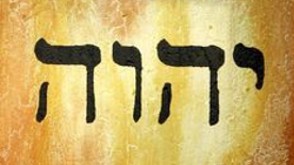
On and on the associations go. This helps me to remember that only, “one thing is needful” (Luke 10:42), so that we are not walking away from Jesus because of his hard sayings. John 6:67–69 provides a description of that place where I, amongst others, may feel they are:
“Jesus asked the twelve, “Do you also wish to go away?” Simon Peter answered, “Lord, to whom can we go? You have the words of eternal life. We have come to believe and know that you are the Holy One of God.”
Thou Fire!
When the scientist and mathematician, Blaise Pascal, died in Paris in 1662, a curious document was discovered in his possession. Sewn into the lining of his coat was a single sheet of paper. The manuscript began with the image of a cross, and, just below it, the date:
“The year of grace 23rd November 1654” Then, “From about half past ten at night until about half past midnight, FIRE. GOD of Abraham, GOD of Isaac, GOD of Jacob, not of the philosophers and of the learned.”
This document has come to be known as the “Mémorial,” It is an allusion to the passage in the Bible of another encounter with fire: Moses speaking with God at the burning bush (Exodus 3) where God reveals Himself as “I AM, WHO I AM.” Words requoted by Jesus in John’s Gospel seven times when he begins by describing himself with the words, “I AM…” This is none other than YaH-WeH.
Pascal, one of “the philosophers and the learned” himself, distinguishes his natural knowledge about God from the intimate knowledge of God that can only come when the divine touches us. His ‘Mémorial’ leads Pascal to an overwhelming apprehension of Jesus:
“This is eternal life, that they know you, the one true God, and the one that you sent, Jesus Christ. Jesus Christ. Jesus Christ. I left him; I fled him, renounced, crucified. Let me never be separated from him.”
Maybe Pascal understood our words, even our reason will falter. Ultimately our life’s odyssey….
“…Will be to arrive where we started, And know the place for the first time.” (TS Eliot ‘The Four Quartets’).
To know what we have always known and has always been on our lips – THOU – from our first breath to our last.