A painful honesty in Advent
“O come, O come, Emmanuel”; “Come, Thou Long-Expected Jesus”; “Lo, He Comes with Clouds Descending.” Even the traditional hymns of this season convey a sense of hopeful longing in Advent. It is a season that begins in the dark and recognises that though Christ has come, his work remains unfinished.
Advent acknowledges our world’s brokenness and tragedy but still has hope for God’s future. There is something honest about the season of Advent. Amid the literal darkness of winter, the Christian Church still hopes. It also hopes amid the metaphorical darkness of the bad news that fills our media. Not because of something we are, or can achieve, but because of who God is and what God can do.
Letters from Prison
Dietrich Bonhoeffer, the Lutheran pastor executed by the Nazis, wrote a famous letter in 1943 from prison:
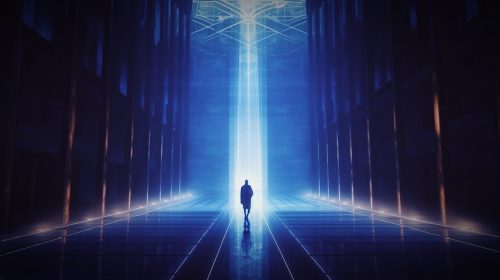
“Life in a prison cell may well be compared to Advent; one waits, hopes, and does this, that, or the other—things that are of no real consequence—the door is shut, and can be opened only from the outside.” (Letters from Prison, 21st Nov, 1943)
And what about the darkness within? Our personal griefs and wounds? Many don’t feel that this is, “the most wonderful time of the year.” When I was a parish priest, many people told me how hard the Christmas holidays were for them. Some stayed away from church because it made them too sad. It is hard to be of good cheer when darkness has overtaken your life. And then there are all the ways we have let ourselves and others down. We have not done well at being family, friends, and neighbours. We have also fallen short at being the Church.
It is into this darkness, without and within, that God’s Word comes. The Church saw in Jesus the inauguration of the long-expected Kingdom of God. But they looked around at their world, as we do with ours. They saw that this kingdom, though begun by Jesus, was not finished. The lion didn’t dwell with the lamb. The weapons of war had not been beaten into ploughshares. There was still injustice and war. The rich oppressed the poor, and the strong abused the weak. But still, they believed in the Word of God, and they yearned for the fulfilment of the prophecies. And they came to believe that they lived “between the times,” between the first and the second coming of Christ, when God would bring all to completion.
We still pray, “Thy kingdom come. Thy will be done, on earth as it is in heaven.” And we strive for it. To bridge the gap between our current dark broken world and the Kingdom of God. But it is not something we can make happen. Ultimately, only God can. As Bonhoeffer wrote:
“…the door is shut, and can be opened only from the outside.”
Watch and Wait
And so, we start the Church’s worshipping year in Advent with the phrase, “watch and wait.” Echoing the words of Bonhoeffer, we sit like prisoners, looking at the prison door. And like prisoners, we may be fearful about the future. There is fear in the air now. Fear of violence. Fear for our democracy. Fear for the natural world. Fear of the Other who is not like us. Fear of the unknown. The message of Advent is we can face fear with hope. Hope in the One who came into our world as a newborn child. He will come again in glory to judge the living and the dead, as the Nicene Creed says. Dare we believe it? Or do our fears overwhelm us too much in hard times? That is the honest question of Advent.
Advent then, is a season that begins in the dark with questions and longings. But it moves toward the light with hope sustained by the imagination of the human spirit. This should not be underestimated. Charles Dickens, in his novel Hard Times (1854), explored the significance of the human imagination. He also examined the consequences of stifling it. Like Bonhoeffer, we watch and we wait and we look at the door, that is true. But we are strengthened in spirit as we are beckoned in our imagination by heavenly voices beyond the door, singing:
“Do not be afraid.”
This is the song of the Angels and a foretaste of the message of the Risen Christ.